Pros and Cons of Buying Land in Virginia in 2026: What to Know Now
Return to BlogGet cash offer for your land today!
Ready for your next adventure? Fill in the contact form and get your cash offer.
By
Bart Waldon
Buying land in Virginia can be a smart lifestyle move, a long-term investment, or the foundation for a working farm or recreational retreat. Virginia’s mix of coastline, Piedmont countryside, and Appalachian terrain creates real variety in land types—and in the opportunities and risks that come with them. The key is matching the property to your goals while understanding today’s market, regulations, and land-use trends.
Why Buying Land in Virginia Appeals to Many
1) Strong agricultural footprint and real economic momentum
Virginia remains a major agricultural state with deep roots in farming, forestry, and land-based business. As of 2022, the state had approximately 7.1 million acres of farmland with an average farm size of 181 acres, according to the Virginia Department of Agriculture and Consumer Services. For buyers considering farmland, timberland, or land that can generate lease income, that scale matters.
Economically, agriculture and forestry are bigger than many buyers realize. Agriculture and forestry together have an economic impact of over $105 billion and provide more than 490,000 jobs in Virginia, according to Co-op Living (citing the Virginia Outdoors Foundation). Co-op Living also reports that every job in agriculture and forestry supports 1.6 additional jobs elsewhere in Virginia’s economy and accounts for 9.3% of the state’s total gross domestic product. That broad support network can be reassuring if you’re buying land to operate a business, rent acreage, or hold productive ground long-term.
2) Export-driven demand supports working land
Virginia agriculture doesn’t stop at state lines. In 2023, Virginia shipped $1.3 billion in domestic agricultural exports abroad, according to the U.S. Trade Representative. Zooming out to include forestry, Virginia’s agricultural and forestry exports reached $3.6 billion in 2023, according to Co-op Living. For buyers evaluating farms, managed timber, or land positioned for specialty crops, these numbers reflect real market pull.
3) Diverse landscapes—from beaches to mountains
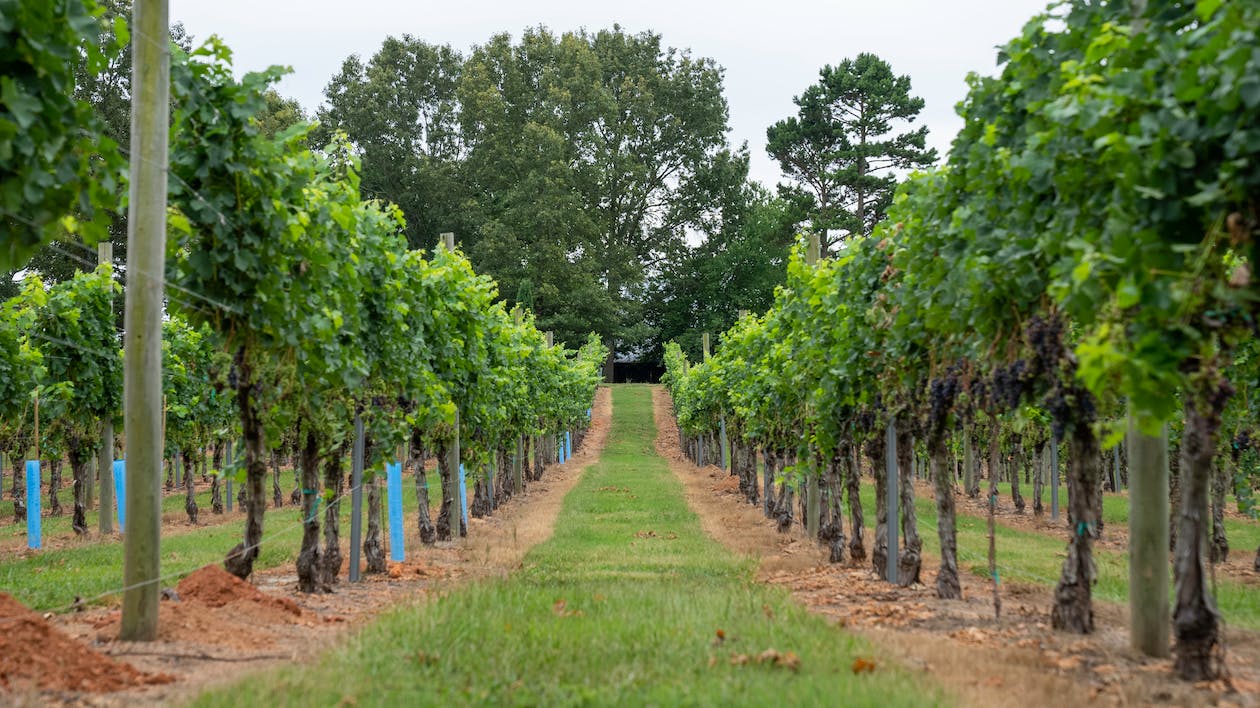
Virginia’s scenery is a major draw because it’s genuinely varied. The Atlantic coastline offers waterfront options and salt-air living. The Piedmont delivers rolling hills, pastures, and vineyard country. Farther west, the Blue Ridge and Appalachian regions provide elevation, views, and privacy. Whether you’re looking for a homesite, hunting tract, horse property, or agricultural acreage, Virginia offers options across very different terrains and ecosystems.
4) Four seasons and practical growing conditions
Many buyers like Virginia’s seasonal rhythm: colorful springs and falls, generally moderate winters, and long warm months that support gardens and many crop types. That climate flexibility is one reason the state continues to attract both lifestyle farmers and commercial operators.
5) Proximity to major East Coast metros
Virginia can feel rural without being remote. Northern Virginia sits next to Washington, D.C., Hampton Roads anchors the southeast, and cities like Richmond, Charlottesville, and Roanoke offer airports, hospitals, universities, and shopping within reasonable driving distance. That mix works well for buyers who want land and privacy while staying connected to jobs, services, and travel.
6) History, small towns, and a sense of place
Virginia’s historic identity is part of the appeal. From colonial-era landmarks to Civil War sites, the state’s towns and countryside can feel timeless. For many buyers, the land itself—stone fences, old roadbeds, historic districts, and longstanding communities—adds meaning beyond acreage.
Virginia Land Market Snapshot (What Today’s Buyers Should Know)
Pricing: what farmland has been averaging
If you’re comparing counties or trying to sanity-check asking prices, recent farmland averages offer a useful baseline. Virginia agricultural land sold in 2023 averaged $5,464 per acre, according to Mossy Oak Properties. The same Mossy Oak Properties report notes that a NASS survey estimated Virginia agricultural land values averaged $5,300 per acre in 2023. Actual pricing still swings widely based on location, road frontage, utilities, timber value, improvements, water features, and development potential—but these figures help frame expectations.
Activity: fewer deals closed in 2023
Transaction volume can signal shifting buyer competition. Virginia agricultural land transaction volume decreased 32.3% to 1,461 transactions in 2023 from 2,159 the previous year, according to Mossy Oak Properties. That slowdown doesn’t guarantee lower prices in every market, but it does suggest many buyers and sellers have been recalibrating—often due to interest rates, construction costs, and tighter underwriting.
Potential Drawbacks of Owning Virginia Land
1) Challenging terrain and site costs in mountain/karst regions
In western Virginia, steep slopes, narrow hollows, and limited access can drive up the cost of roads, driveways, foundations, and utility runs. Some areas also have karst geology (sinkholes, caves, and underground drainage), which can complicate septic design and construction. Always budget for due diligence—surveying, soil work, and engineering—before committing to a parcel that looks “perfect” online.
2) Local zoning, permitting, and land-use restrictions
Virginia land use is highly local. Counties may regulate subdivision, building setbacks, agricultural structures, hunting, short-term rentals, livestock density, and more. Before you buy, confirm what you can build and how you can use the land—especially if your plan includes multiple dwellings, event use, agritourism, or commercial activity.
3) Coastal storm and flood considerations
Coastal Virginia faces tropical systems and flooding risk, particularly in late summer and early fall. Even when storms weaken, surge and rainfall can affect low-lying areas. If you’re buying near tidal water, check elevation, flood zone mapping, drainage patterns, and storm history before finalizing your offer.
4) Premium pricing in “hot” regions
Prices can jump sharply near Northern Virginia, Richmond, Charlottesville, and popular lake or mountain communities—especially for parcels with homes, barns, fencing, established fields, or high-end views. If you’re targeting turnkey land with improvements, expect competition and higher per-acre costs than raw rural acreage.
5) Reforestation, brush, and the cost of “making land usable”
Many tracts that look open on old maps are now wooded or partially regenerated. That can be a plus for hunting, timber, and privacy, but it can be a drawback if you want immediate pasture or cropland. Clearing, mulching, grading, fencing, and stump removal add up quickly—so evaluate the true “ready-to-use” acreage, not just the total acreage.
6) Water reliability and drought cycles
Virginia does experience drought periods that can affect wells, springs, ponds, and crops. If your property will rely on groundwater or surface water, verify well depth and yield (when available), inspect existing water systems, and plan for contingencies like storage tanks, irrigation, or drought-tolerant land management.
A Major Trend to Watch: Farmland Conversion and Conservation
Land in Virginia is under real pressure from development, and that affects availability, pricing, and long-term land character. Between 2012 and 2022, more than 7,000 Virginia farms comprising over 992,000 acres of farmland were converted to non-agricultural uses, according to the Virginia Conservation Network. For buyers seeking working land, that conversion trend can make prime tracts harder to find and more competitive.
At the same time, conservation has meaningfully protected high-quality soils. State, local, and nonprofit land conservation efforts have conserved a total of 651,287 acres of land with prime and significant soils in Virginia, according to the Virginia Outdoors Foundation. If you’re considering land with an easement (or you want to place one), review how it affects building rights, subdivision, timbering, and future resale.
Key Questions to Ask Before Buying Virginia Land
- What’s the primary goal? Farming, building, timber, recreation, hunting, or holding for appreciation each requires different land traits.
- How will you access it? Confirm deeded access, road frontage, and year-round drivability.
- What’s the flood and drainage profile? Check FEMA maps, on-the-ground water flow, and erosion signs.
- What utilities are realistic? Electric, septic suitability, well feasibility, and broadband availability vary widely.
- What improvements already exist? Evaluate the condition and legality of homes, barns, wells, septic systems, fencing, and roads.
- Is the water source dependable? Verify well details, spring reliability, pond condition, and water rights/agreements if applicable.
- What do zoning and permits allow? Confirm your intended use in writing with the county when possible.
- What contingencies protect you? Consider survey, perc/soil, title, and financing contingencies.
- Which professionals do you need? A land-savvy agent, surveyor, soil scientist/engineer, attorney, forester, and inspector can prevent expensive surprises.
If you want a practical starting point for Virginia-specific buying guidance, explore land resources from Land Boss. For sellers or buyers comparing cash-offer options and timelines, see Virginia land information directly.
Final Thoughts
Virginia land can deliver exceptional value—scenic diversity, strong agricultural fundamentals, and proximity to major East Coast markets. At the same time, terrain challenges, zoning complexity, storm and water considerations, and premium pricing in high-demand areas can change the economics fast. Do thorough due diligence, understand the market signals, and align the parcel with your intended use. With the right plan and the right advisors, buying land in Virginia can become a rewarding place to build, farm, invest, or simply breathe.
Frequently Asked Questions (FAQs)
What are the main benefits of buying land in Virginia?
Buyers are drawn to Virginia’s diverse landscapes, four-season climate, access to major metros, and strong farm-and-forest economy. The state’s agricultural footprint is substantial, with 7.1 million acres of farmland (2022), according to the Virginia Department of Agriculture and Consumer Services.
What are some downsides to consider?
Steep terrain, karst geology, permitting, and storm or flood risk in certain areas can add cost and complexity. Land clearing and access improvements can also be significant expenses, especially where reforestation has reduced open acreage.
What is Virginia farmland worth per acre?
Values vary by region and property features, but recent benchmarks help. Virginia agricultural land sold in 2023 averaged $5,464 per acre, according to Mossy Oak Properties. A NASS survey estimated Virginia agricultural land values averaged $5,300 per acre in 2023, also reported by Mossy Oak Properties.
Is demand for Virginia land changing?
Market activity shifted in 2023. Virginia agricultural land transaction volume decreased 32.3% to 1,461 transactions in 2023 from 2,159 the previous year, according to Mossy Oak Properties. Local conditions still vary, so review county-level trends and comparable sales.
What professionals should I involve before closing?
Most buyers benefit from a land-experienced real estate agent, a surveyor, an attorney, a soil/septic professional, and inspectors or contractors for any structures. If timber value matters, consult a forester as well.
.jpg)
Related Posts.
